Why Your NDIS Funding Disappears: 5 Red Flags You Need to Watch
5/19/2026

The Slow Leak of Disability Funding
Many NDIS participants find their budget empty without knowing why. System failures usually happen slowly through quiet administrative errors rather than sudden illegal events. You must understand that the NDIS is transitioning to funding periods. This technical shift makes monitoring your budget more urgent than ever before.
These problems often stem from misplaced trust in a system that is currently breaking down. You might feel embarrassed that you do not understand where the money went, but you must take control now. Protection starts with noticing the red flags that suggest your funding is being mishandled.
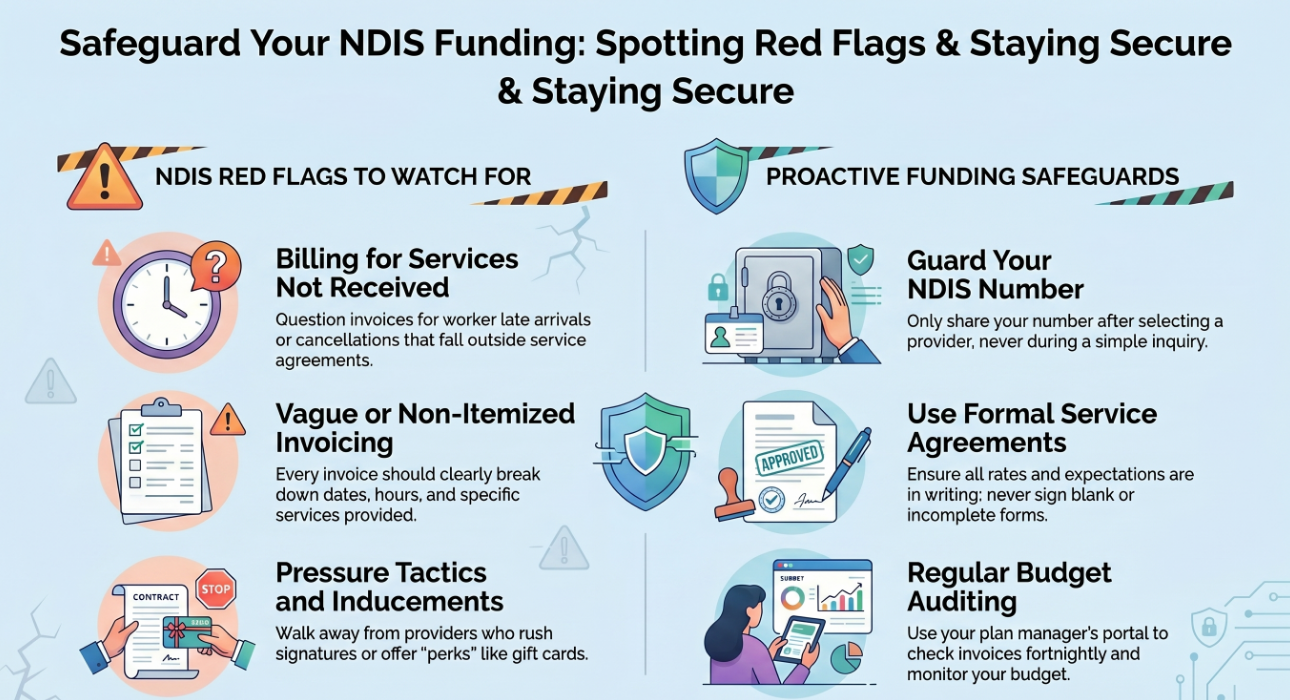
Red Flag 1: Paying for Services You Never Received
Providers sometimes bill for phantom services that were never delivered. For example, a support worker might arrive 30 minutes late for a two-hour shift but still invoice for the full two hours. They might also charge for cancellations that occurred well outside the window specified in your service agreement.
Question every small discrepancy immediately to protect your funding. Ignoring these errors signals that you accept inaccurate billing as a standard practice. The NDIS Quality and Safeguards Commission views your silence as consent to these financial leaks.
Sometimes it is a mistake. Business owners make mistakes and we are all human. But sometimes it is not a mistake. Either way, ignoring it tells the system that you are okay with it.
Red Flag 2: The Support Services Invoice Trap
Vague invoicing is a significant danger to your NDIS budget. Invoices that only list "Support Services" without dates or line-item breakdowns are unacceptable. You must be able to look at any invoice and immediately identify exactly what you are paying for.
Every invoice must contain specific dates and a line-item code from the NDIS Price Guide. Demand a full breakdown for every charge before authorizing payment. Technical clarity is your primary defense against the depletion of your plan.
Red Flag 3: High-Pressure Sales and Manufactured Urgency
Watch for providers who use high-pressure tactics to get you to sign paperwork quickly. They might present a service agreement during a meet-and-greet and demand a signature that same day. They may also claim they have limited spots to force a fast, uninformed decision.
Slow right down when you feel this pressure. Reputable providers encourage questions and allow you time to review documents at your own pace. If a provider rushes you, walk away, as they are prioritizing their profit over your choice and control.
Red Flag 4: The Grocery and Gift Card Perk Risk
Be wary of providers who offer illegal incentives to secure your business. Some might offer Woolworths gift cards, PlayStations, or cashback deals. They may even offer to pay for your weekly groceries in exchange for signing up.
Accepting these perks puts you at risk of fraud investigations, not the provider. If a provider mentions rewards or any benefit that feels like a perk for using their services, walk away. Do not engage with these businesses because they operate outside of NDIS rules.
Red Flag 5: Giving Away Your NDIS Number Too Soon
Your NDIS number is the key to your funding. Treat this number with the same secrecy as you would your bank PIN. Sharing this number allows a provider to link to your plan and draw down funds without further interaction from you.
Do not provide your NDIS number during a basic availability inquiry. For example, if you call to ask if a worker is available on Thursday, the provider does not need your number to answer. Withhold this information until you have officially chosen a provider and are ready to begin services.
Proactive Safeguards: The Written Defense
You must put basic safeguards in place from the start of your plan. Build strong relationships with your plan manager and support coordinator to monitor your spending. If you cannot manage the plan alone, ensure you have a trusted nominee in place to help explain your funding.
Always have a written Service Agreement. This document must define the specific rates, hours, and cancellation terms for all provided supports.
Never sign blank or incomplete forms. A provider might ask you to sign a document and offer to fill in the details later, which allows them to record hours you never agreed to.
Perform regular budget checks. Use your plan manager portal to review invoices every fortnight for correct dates, hours, and rates.
if it is not written down, it's very hard to fix later.
Conclusion: Taking Control of the Timeline
Rushing through the NDIS process benefits the provider. Clarity and deliberate decision-making benefit you. The transition to funding periods means you have less room for error, so you must be vigilant with every cent.
If your funding is dropping faster than expected, you have the right to investigate. Slow the process down and ask the hard questions today. Your budget depends on your willingness to notice these red flags and act on them immediately.